Risk at Runtime
When software starts acting on its own, risk management built for quarterly review cycles stops working. The controls have to run at the speed of the systems they govern.
Read the note →Thirty years running the business of technology inside the largest banks in America: the investment, the operating performance, the cyber and technology risk, and now AI. I know what a board is going to be told, because I’ve been the one telling it.
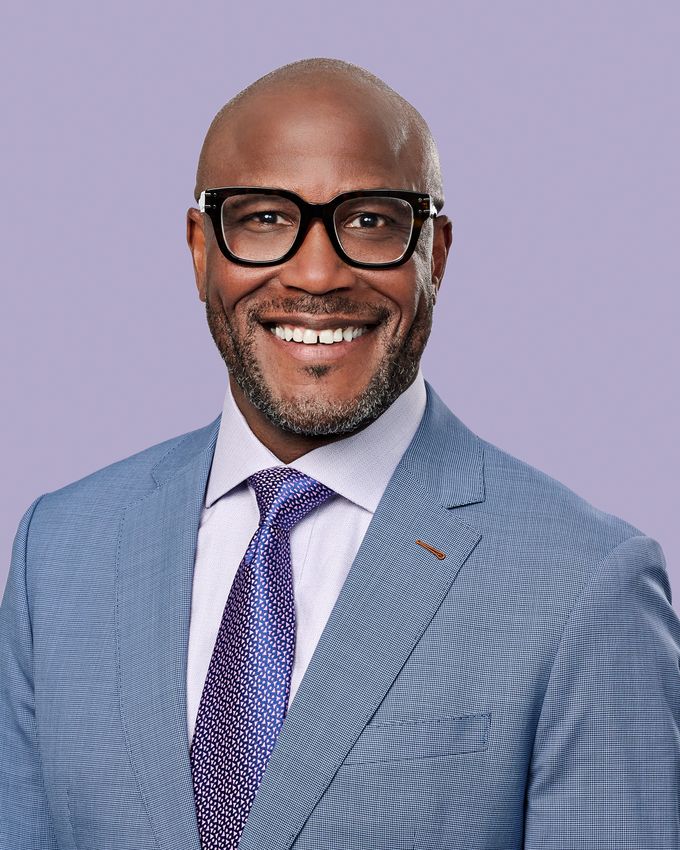
Technology is the largest line in most budgets and the least examined. These are the questions I help a board ask, and the record behind each one.
At Truist I run a multi-billion-dollar P&L and the investment plan for a 23,000-person technology and operations division. At Wells Fargo I was accountable for a $3.5B-plus consumer technology book of work and for benchmarking it against the market. At Bank of America I stood up the bank’s first technology product management function over a $3B infrastructure portfolio.
I know what a technology budget hides and what it should be asked to prove.
COO of Global Information Security at Bank of America, with direct accountability for a $1.3B cyber budget and the quarterly risk assessments behind it. At Wells Fargo we simplified 25-plus technology policies into five and automated 1,500-plus manual controls on one platform.
I read risk at the control level, not the slide level.
I ran one of the industry’s earliest and largest enterprise generative-AI programs inside a systemically important bank, with the governance built alongside the adoption. Today I’m accountable for how Truist’s technology division puts generative and agentic AI to work under the controls a bank has to keep. My thinking on it is public: Risk at Runtime and Governing Digital Labor.
Boards don’t need a new governance regime for AI. They need to know who holds the authority they’ve delegated to it.
$300M-plus in annual savings from insourcing the largest managed-services agreement in financial services. A $235M cut in annual operating expense through a Save Management Office I launched. A $1.8B reduction in capital budget. At a venture-backed technology company, 7× valuation growth and a 30-to-400 person scale-up as President and CTO.
I’ve done the hard version of change, where the savings have to show up in the ledger.
I’ve built the teams. I co-founded Bank of America’s Black Executive Leadership Council, grew cyber team diversity 40 percent by changing how we recruited, and chaired the board of Out & Equal, the largest organization in the world working on LGBTQ+ workplace equality.
Human-capital oversight is a board job. I’ve done the management side of it for three decades.
I speak for the U.S. Department of State abroad on cybersecurity, technology governance, and inclusive economies, and I’ve spent my career in institutions where the examiner is in the room. I know how a supervisory finding gets made, and what a board should ask before one does.
Regulators don’t grade intentions. They grade evidence.
I bring an operator’s habits to governance, which mostly means asking what the plan is and who owns it.
Georgia’s technology industry association, convening the state’s technology companies, leaders, and policymakers from Atlanta.
Tennis, academic support, and mentoring for young people in Harlem.
Helping elect LGBTQ+ leaders to public office at every level.
The largest organization in the world working on LGBTQ+ workplace equality.
Serves hundreds of thousands of New Yorkers a year.
National organizations building the next generation of LGBTQ+ technologists and leaders.
I write to work things out, and I publish the drafts. Three that show how I’d approach a board conversation about technology risk, AI, and judgment.
When software starts acting on its own, risk management built for quarterly review cycles stops working. The controls have to run at the speed of the systems they govern.
Read the note →Decision quality is about the single call. Decision integrity is about what that call does to every decision after it.
Read the note →Agents don’t need a new governance regime. The delegation of authority to them does. A human stays accountable by design, not by inevitability.
Read the note →Nominating committees, search partners, and CEOs: the form on the homepage reaches me directly, and I read every message. Download the bio for your file, or find me on LinkedIn.